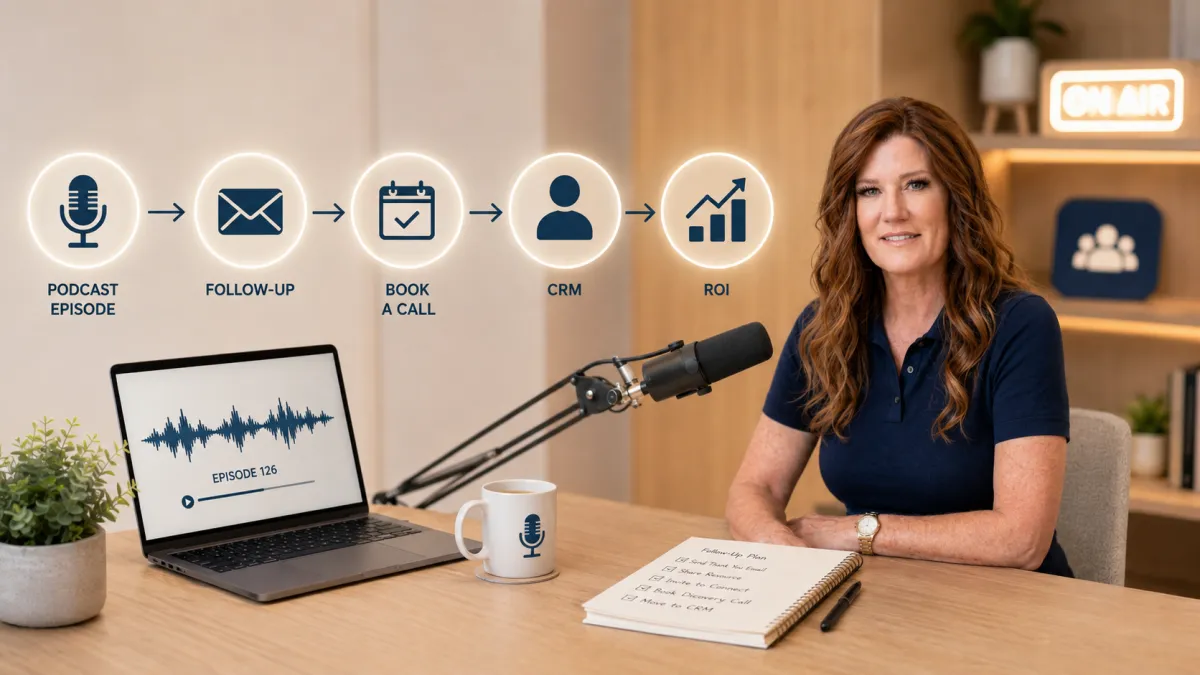
What Happens After the Episode? The Missing Follow-Up Path in Podcast ROI
What Happens After the Episode? The Missing Follow-Up Path in Podcast ROI
A great podcast episode can create attention, trust, and curiosity.
But attention does not automatically become revenue.
This is where many podcast hosts, guests, speakers, coaches, consultants, and thought leaders lose the real business value of podcasting. The interview goes live. The post gets shared. A few people listen. Maybe someone comments, likes, or sends a kind message.
Then nothing happens next.
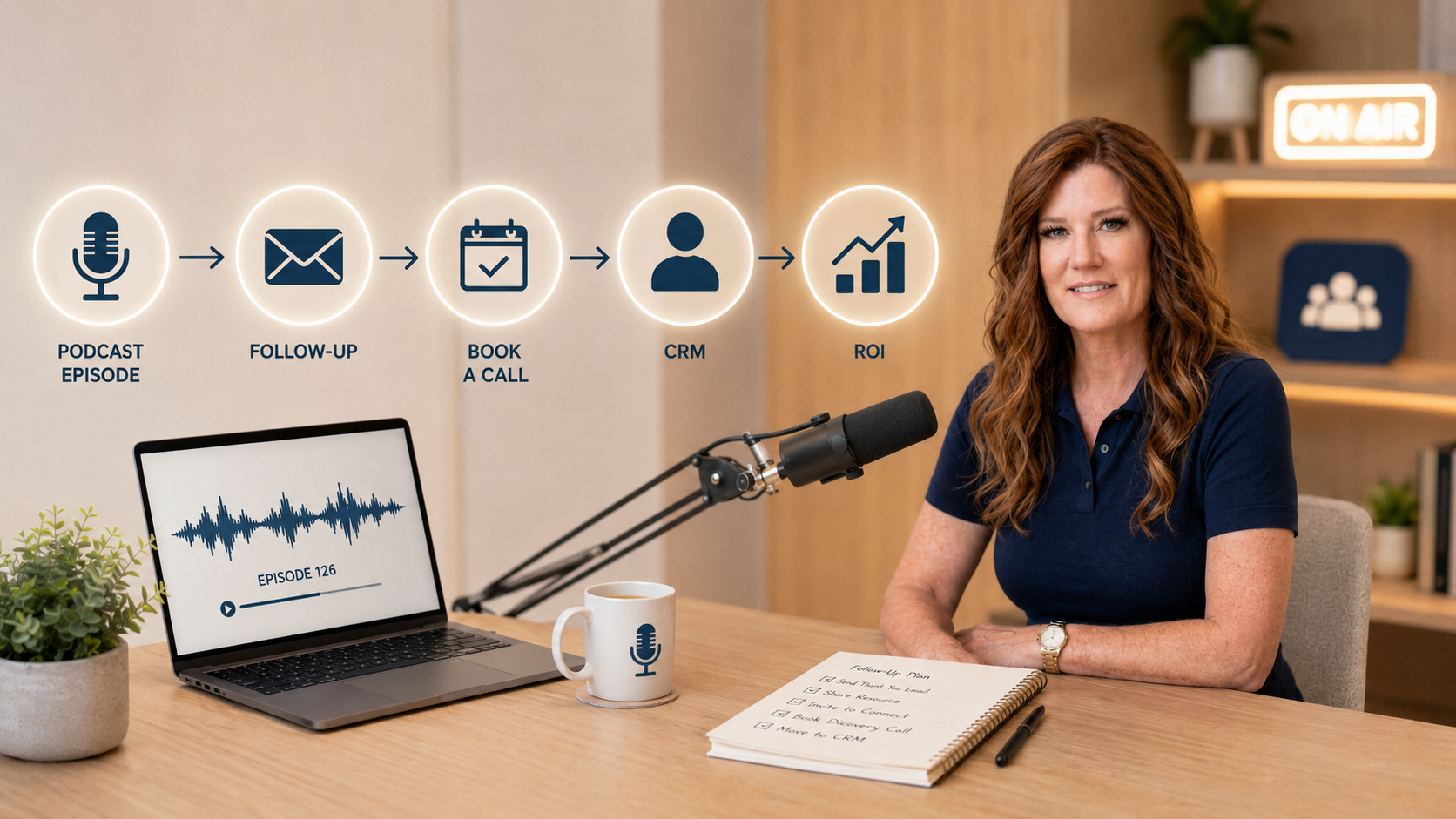
That is not a visibility problem. It is a follow-up problem.
If there is no structured podcast follow-up path, the opportunity fades before it ever becomes measurable. The listener who was curious gets distracted. The host who enjoyed the conversation moves on to the next episode. The warm connection who meant to reach out never does.
Podcast ROI is not created during the episode alone. It is created by what happens after the episode.
Why Is the Episode Only the Beginning?
The episode starts the relationship. It does not finish the conversion.
Podcasting works because it gives people time to hear how you think, how you solve problems, and what you believe. That is powerful. But even the best conversation needs a next step.
Listeners are often multitasking when they hear an episode. They may be driving, walking, working, or catching up between meetings. Even when your message lands, they are not always in a position to act immediately.
That means your podcast strategy cannot depend on someone remembering your name later and searching for you when life gets quieter.
Because life rarely gets quieter.
A strong podcast ROI strategy assumes that interest needs to be captured while it is fresh. The episode creates the spark. The follow-up path turns that spark into a real business opportunity.
Where Does Podcast Follow-Up Usually Break?
Podcast follow-up usually breaks because there is no clear system connecting attention to action.
For podcast guests, the breakdown often starts with a generic call to action. They say, “Visit my website” or “Connect with me on LinkedIn,” but there is no specific reason for the listener to take the next step now.
For podcast hosts, the breakdown often happens after publishing. The episode is promoted once or twice, added to the content library, and then treated as complete. But a published episode should not be the end of the strategy. It should become part of a follow-up ecosystem.
For warm connections, the gap is even more obvious. Someone may engage with the episode post, comment on the conversation, or mention that the topic was useful. But without a thoughtful follow-up process, that signal gets missed.
This is why good episodes still lose leads. The interest exists, but there is no installed path to collect, nurture, and convert it.
Why Do Interested Listeners Disappear Without a Next Step?
Interested listeners disappear because attention has a short shelf life.
Most people do not ignore your offer because they are not interested. They drift because there is no simple next action that matches where they are in the decision process.
Someone listening to your episode may not be ready to book a call. They may not even know exactly what they need yet. But they may be ready to answer a few questions, download a useful resource, compare their current approach, or get a quick reality check.
That is the difference between a cold call to action and a smart podcast lead generation path.
The listener does not need to be pushed. They need to be guided.
When your next step is too vague, too big, or too disconnected from the episode topic, the listener’s interest leaks out of the system. When your next step is clear, relevant, and easy, the podcast becomes a bridge into a deeper business conversation.
What Should a Simple Podcast Follow-Up Path Include?
A simple podcast follow-up path should include a clear next step, a way to capture interest, and a nurturing sequence that continues the conversation.
This does not need to be complicated. In fact, the simpler it is, the better it usually performs.
The first piece is a relevant call to action. It should connect directly to the topic discussed in the episode. If you talked about podcast ROI, the next step should help the listener evaluate their podcast ROI. If you talked about operational growth, the next step should help them identify operational gaps.
The second piece is a capture point. This could be a diagnostic, checklist, quiz, guide, resource page, or short assessment. The goal is not just to collect an email address. The goal is to understand what the person cares about and where they are in the decision process.
The third piece is follow-up. This is where many podcast strategies fall apart. A listener takes one action, then receives either nothing or a generic newsletter that does not connect to the reason they raised their hand.
A stronger system continues the thread. It reminds them why the topic matters, helps them see the cost of inaction, gives them a useful next step, and creates a natural invitation into your offer.
How Does a Follow-Up System Turn Podcast Attention Into Measurable Opportunity?
A follow-up system turns podcast attention into measurable opportunity by giving every interested person a clear path forward.
Instead of hoping someone remembers you, the system tracks engagement. Instead of guessing whether podcasting is working, you can see who responded, what they clicked, what they requested, and which conversations were created.
This is where podcast monetization becomes more practical.
You are no longer measuring podcast ROI only by downloads, likes, or compliments. You are measuring movement.
Did the episode send people to the right page?
Did the call to action match the topic?
Did listeners complete the next step?
Did the follow-up create replies, booked calls, or sales conversations?
Did the episode strengthen your authority with hosts, guests, partners, or future buyers?
That is how podcasting becomes a real business growth channel instead of another visibility activity on your calendar.
The system does not replace the relationship. It protects it.
It makes sure the attention you earned has somewhere useful to go.
FAQ
What is a podcast follow-up path?
A podcast follow-up path is the process that guides listeners, hosts, guests, and warm connections from podcast interest into a meaningful next step. It usually includes a clear call to action, a capture point, and a follow-up sequence that continues the conversation after the episode.
Why do podcast episodes fail to generate leads?
Podcast episodes often fail to generate leads because there is no structured system after the episode airs. The content may be strong, but if the listener does not know what to do next or receives no follow-up, the opportunity disappears.
How can I improve podcast ROI without creating more episodes?
You can improve podcast ROI by strengthening what happens after each episode. Add a topic-specific call to action, create a simple lead capture step, follow up with relevant messaging, and track whether each episode is creating measurable movement toward conversations, leads, or sales.
Before You Move On, Check This
If you are hosting a podcast or showing up as a guest, the real question is not whether you are doing enough.
It is whether what you are doing is actually working.
The Podcast ROI Reality Check gives you a clear snapshot of where your podcasting efforts are supporting business growth, where they are leaking opportunity, and what to focus on next.
It is not a pitch.
It is a diagnostic.
Take the Podcast ROI Reality Check here:
https://profitboosterpod.com
About the Author

Marcia Riner is a Business Growth Strategist and CEO of Infinite Profit®. She works with established business owners as a Growth Implementation Partner, helping them turn strategy into action that drives profitable growth. Through her Profit Booster® frameworks and the Profit Booster® Growth Agency, she helps companies strengthen revenue, improve margins, and build businesses that can scale without the owner carrying everything.
Marcia is also the host of the Profit With A Plan podcast, where she interviews founders, experts, and industry leaders about the real strategies behind business growth, leadership, and building a company with long-term value.
Learn more at
https://infinite-profit.com